
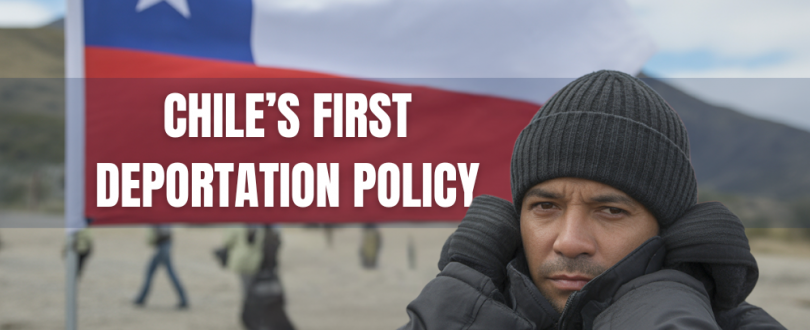
Chile has made its move—and it’s loud, deliberate, and unmistakably political. The government of President José Antonio Kast has launched its first deportation flight, marking the opening act of a sweeping immigration crackdown that could reshape migration policy across Latin America.
This isn’t just a flight. It’s a message.
A Policy in Motion: What Actually Happened
On April 16, 2026, Chile deported 40 foreign nationals via a government-organized flight departing from the northern city of Iquique. The individuals were sent back to Bolivia, Colombia, and Ecuador, kicking off what officials describe as the first in a series of removals under a new migration plan.
The breakdown matters:
– 15 deportees were removed for criminal offenses (including robbery and drug-related crimes)
– 25 were administrative cases, meaning they were in Chile without proper legal status
Chile hasn’t disclosed how frequently these flights will occur—but officials made one thing clear: this is just the beginning.
The Strategy: Pressure, Deterrence, and “Voluntary Exit”
Chile’s approach blends two tactics:
1. Forced deportations
Structured flights targeting migrants with expulsion orders—especially those linked to crime.
2. Encouraged self-deportation
Kast has openly urged undocumented migrants to leave voluntarily or face removal. Since his election, over 2,000 Venezuelans have already left Chile on their own.
This dual-track strategy mirrors a broader global trend: make staying difficult enough that leaving becomes the easier option.
The Bigger Picture: Why Chile Is Tightening Control
Chile’s shift didn’t happen in a vacuum. It’s rooted in three pressure points:
1. Rising irregular migration
Chile hosts hundreds of thousands of undocumented migrants, many from Venezuela. Estimates suggest tens of thousands already have deportation orders pending.
2. Public concern over crime
Kast’s campaign explicitly linked irregular migration to rising crime—an argument that helped power his election.
3. Regional migration strain
Latin America is absorbing one of the largest displacement waves in modern history, driven largely by Venezuela’s crisis. Chile, once seen as a stable destination, is now recalibrating.
Regional Fallout: Diplomacy, Logistics, and Friction
Deportation sounds straightforward—until geopolitics enters.
– Colombia, Ecuador, and Bolivia must receive deportees, sometimes with little notice
– Venezuela remains a major challenge: Chile lacks diplomatic relations, making forced returns difficult
– Governments receiving deportees may face social reintegration and security concerns
The result? Deportation policy becomes foreign policy.
Criticism and Risks
Not everyone is convinced this strategy will hold.
Critics argue:
– Mass deportations can strain diplomatic ties
– Linking migration to crime risks fueling xenophobia
– Enforcement-heavy approaches often fail to address root causes
There’s also a practical constraint: Chile reportedly has over 44,000 people eligible for deportation, but executing removals at scale is logistically complex.
What Comes Next
Chile’s government has signaled:
– More deportation flights (possibly monthly)
– Expanded border enforcement (including physical barriers and surveillance)
– Continued pressure on undocumented migrants to leave voluntarily
This is not a short-term operation—it’s a structural shift.
Why This Matters Globally
Chile’s move reflects a broader pattern in 2026 immigration policy:
– Harder borders
– Faster removals
– Selective tolerance for migrants
From the U.S. to Europe to Latin America, governments are converging on a similar playbook: tight control, strategic openness, and visible enforcement.
Chile’s first deportation flight is more than a policy rollout—it’s a signal flare.
A country once known for relative openness is now leaning into enforcement, deterrence, and political messaging. Whether it stabilizes migration—or escalates regional tension—will depend on what happens next.
FAQ: Chile’s Deportation Flights and New Migration Policy
1. What is Chile’s new migration plan?
Chile’s new migration plan focuses on stricter enforcement against irregular migration, combining deportation flights, tighter border controls, and incentives for undocumented migrants to leave voluntarily. It reflects a broader shift toward a security-first immigration approach.
2. Who is being deported under this policy?
The policy targets two main groups:
- Foreign nationals with criminal convictions
- Individuals with administrative violations, such as overstaying visas or entering without legal authorization
3. How often will deportation flights take place?
The government has not confirmed a fixed schedule, but officials indicated that the first flight is part of an ongoing series, suggesting regular deportation operations moving forward.
4. Can undocumented migrants avoid deportation?
Yes—Chile is encouraging voluntary departure. Migrants who leave on their own may avoid forced removal and potential future re-entry bans, depending on their case.
5. Why is Chile taking a tougher stance on immigration now?
The shift is driven by rising irregular migration, public concern over crime and border control, and political pressure to strengthen national security. It also aligns with a wider global trend toward stricter immigration enforcement.


