

The March 2026 Visa Bulletin from the U.S. Department of State brings modest forward movement for several key categories, offering hope to family-sponsored and employment-based applicants. Released on February 11, 2026, this bulletin outlines priority date cut-offs for immigrant visa availability. If your priority date is current, it’s time to act—file adjustments or consular processing now.
Whether you’re navigating family reunification or employment visas, understanding these shifts can make or break your timeline. Let’s break down the highlights, key dates, and what they mean for you.
Family-Sponsored Preference Dates: Steady Progress
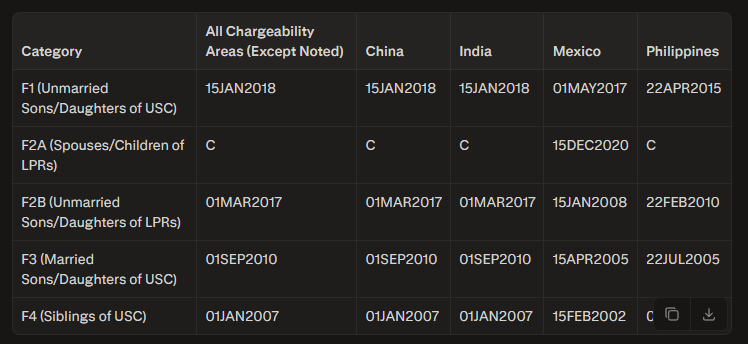
Family-based categories saw minor advancements, particularly for siblings (F4) from Mexico and the Philippines. No retrogressions this month, which is welcome news amid high demand.
Key Advances:
F1 Philippines jumped 6 weeks to April 22, 2015—check if you’re newly current.
F4 Mexico advanced 1 month to February 15, 2002, easing backlogs for large families.
Final action dates apply for USCIS adjustment of status filings. Compare your priority date to these to see if you can submit Form I-485.
Employment-Based Preference Dates: EB-2 India & EB-3 Gains
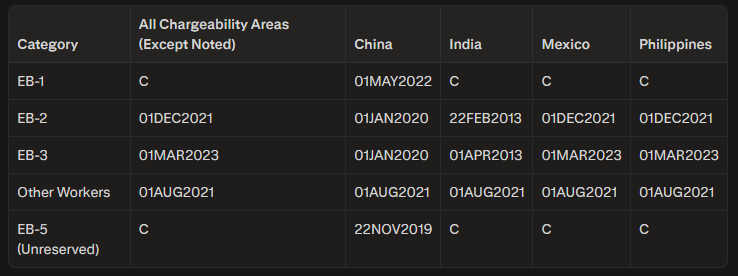
Employment categories continue inching forward, with EB-3 “Other Workers” leading the pack. EB-5 categories remain mostly current, boosting investor petitions.
Key Advances:
-
EB-2 India moved to February 22, 2013 (1 week forward)—a small but critical step for skilled workers.
-
EB-3 worldwide advanced to March 1, 2023, opening doors for more professionals.
-
EB-1 China retrogressed slightly to May 1, 2022 due to spillover limits.
These dates determine when USCIS accepts I-485 filings. EB categories use the same dates for both final action and filing charts this month.
Filing Action Dates Chart: Expanded I-485 Eligibility
USCIS also released its Table A (Filing Applications) chart, allowing earlier I-485 submissions under certain conditions. For March 2026:
-
Family-sponsored: Up to 1 year ahead of final action dates in most categories.
-
Employment-based: EB-3 Other Workers can file up to 6 months early.
Example: EB-2 applicants from India (final action: Feb 22, 2013) may file I-485 if their date is before June 22, 2013. Always verify on the USCIS Visa Bulletin page.
What Changed from February 2026?
-
Forward Movement: 9 categories advanced 1-6 weeks; EB-5 Rural remains “current.”
-
No Retrogressions: Except EB-1 China (3 weeks back).
-
Predictions: Expect continued slow progress into FY2027, but high EB-2/3 demand from India/China could stall gains.
Next Steps for Applicants
-
Check Your Date: Locate your priority date on Form I-797 and compare it to the bulletin tables.
-
Gather Documents: Prepare birth certificates, medical exams, and affidavits of support.
-
File Promptly: Deadlines are strict—use USCIS Direct Filing Addresses for I-485.
-
Monitor Updates: Bulletins drop mid-month; set alerts via the State Department’s Visa Bulletin page.
-
Consult Experts: For complex cases (e.g., cross-chargeability), reach out to an immigration attorney.
Staying proactive with monthly bulletins keeps you ahead. Questions on your specific category?


