
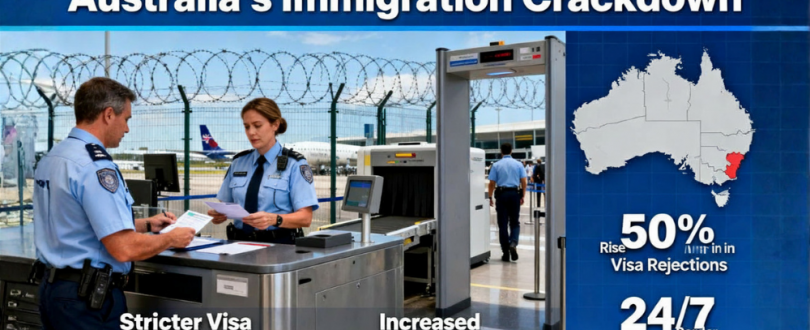
Australia is heading toward a major immigration reset—and it’s happening in real time.
As political pressure builds ahead of upcoming elections, policymakers are pushing a hardline approach to migration, signaling tighter controls, increased deportations, and stricter visa scrutiny.
At the center of this shift is Angus Taylor, whose proposed policies are quickly turning immigration into one of the most contested issues in the country.
A Hardline Immigration Agenda Takes Shape
Australia’s proposed immigration crackdown is not subtle—it’s structural.
Key elements of the plan include:
– Stricter visa screening processes
– Enhanced background checks, including social media vetting
– A significant increase in deportations
– Reduced access to public benefits for migrants
This marks a clear pivot toward a security-first immigration model, with eligibility and compliance standards tightened across the board.
Social Media Checks: A New Layer of Scrutiny
One of the most controversial proposals is expanding social media screening for visa applicants.
Authorities may review:
– Online behavior
– Public posts and affiliations
– Potential “values misalignment” with Australian norms
This reflects a broader global trend: immigration systems are no longer just assessing documents—they are evaluating digital identity and personal expression.
Implication:
Applicants must now think beyond paperwork. Your online presence could directly influence visa outcomes.
Deportation Plans Target Overstayers
Another headline measure is the proposed deportation of up to 65,000 visa overstayers.
This is a significant escalation in enforcement and suggests:
– Increased tracking of visa compliance
– Stronger coordination between agencies
– Faster removal processes
For context, visa overstayers have long been a challenge in Australia—but this scale of enforcement signals a zero-tolerance approach moving forward.
Reduced Access to Migrant Benefits
The proposal also includes limiting migrants’ access to certain public benefits.
This could affect:
– Welfare support
– Housing assistance
– Other government-funded services
The policy aims to:
– Reduce strain on public resources
– Prioritize citizens and permanent residents
– Deter migration motivated by economic benefits
However, critics argue it may increase vulnerability among migrant communities already navigating complex settlement challenges.
Immigration Becomes a Political Battleground
Immigration is no longer just policy—it’s politics.
With elections approaching, migration is shaping up to be a defining campaign issue in Australia.
Competing narratives are emerging:
Pro-crackdown: Focus on border control, national identity, and economic sustainability
Pro-reform: Emphasis on humanitarian obligations, workforce needs, and multicultural inclusion
This tension is pushing immigration to the forefront of national debate—where policy decisions are increasingly influenced by public sentiment and political strategy.
The Bigger Picture: Australia Aligns with Global Trends
Australia’s shift is not happening in isolation.
Across the globe, countries are tightening immigration systems through:
– Stricter enforcement
– Increased use of data and surveillance
– Reduced tolerance for irregular migration
Australia is now firmly part of this movement—adopting policies that prioritize control, compliance, and national interest.
What This Means for Migrants and Applicants
If these measures move forward, the impact will be immediate:
1. Higher Barriers to Entry
Visa approvals may become more selective, with deeper background checks.
2. Increased Risk for Overstayers
Non-compliance could lead to faster and more certain deportation.
3. Digital Footprint Matters
Applicants will need to manage their online presence carefully.
4. Fewer Safety Nets
New migrants may have limited access to public support systems.
Final Take
Australia’s immigration system is entering a tougher era—one defined by stricter rules, stronger enforcement, and political urgency.
For migrants, the message is clear:
Preparation, compliance, and transparency are no longer optional—they’re essential.
As the debate intensifies and policies evolve, staying informed will be critical for anyone looking to live, work, or study in Australia.
Frequently Asked Questions (FAQ)
1. What changes are being proposed in Australia’s immigration policy in 2026?
The proposed changes focus on stricter visa screening, expanded background checks (including social media), increased deportations of overstayers, and reduced access to certain public benefits. These measures are part of a broader push led by Angus Taylor to tighten immigration controls in Australia.
2. Will Australia really deport thousands of visa overstayers?
Yes, under the proposed plan, authorities aim to deport up to 65,000 visa overstayers. This would significantly increase enforcement efforts and reflect a more aggressive stance on immigration compliance.
3. How will social media checks affect visa applicants?
Visa applicants may be subject to social media screening, where authorities review online activity, public posts, and affiliations. This means your digital footprint could influence your visa approval, making it important to maintain a clean and consistent online presence.
4. Will migrants lose access to government benefits?
Some proposals include limiting access to welfare and public services for migrants. While full details are still evolving, the goal is to prioritize resources for citizens and permanent residents while discouraging benefit-driven migration.
5. When will these immigration changes take effect?
Most of these measures are still in the proposal or political discussion stage. Their implementation will depend on election outcomes and legislative approval in Australia, so timelines may vary throughout 2026.


